In 1970 Murray Gell-Mann had just been awarded a Nobel prize for his Eightfold Way and quarks¹, and Fermilab was under construction. It was then called the National Accelerator Laboratory (NAL), and it was situated near Batavia, Illinois. This was Big Science on a big scale, with a 6,800 acre site, an architect-designed main building, and a Main Ring proton synchrotron four miles in circumference:
 Fermilab image from the Fermilab website
Meanwhile in Italy the ADONE electron-positron ring collider was delivering results. ADONE was a larger version of a proof-of-concept collider called Ada. A collider, as opposed to an accelerator, featured head-on collisions. This meant that beam energy was not being converted into the kinetic energy of the target. Hence a collider was more efficient, and more scalable. It’s why CERN were constructing the world’s first hadron collider near Geneva. This was called the Intersecting Storage Rings (ISR), the rings being just under a kilometre in diameter. CERN had also installed the Gargamelle bubble chamber on their proton synchrotron. Gargamelle was 4.8 metres long and 2 metres in diameter. It contained 12 cubic metres of “heavy” liquid Freon, it was surrounded by 2-Tesla magnets, and it weighed a thousand tons in all. At the same time the Soviet Union had the U70 proton synchrotron with a 1.5 km circumference. This was then the most powerful accelerator in the world².
The R ratio
As it happens the ADONE results were surprising. That’s because they included a high rate of multihadron production at energies over 1.5 GeV, much greater than that predicted by the R ratio of hadron/muon production. This R ratio was closely related to the Bjorken scaling that was said to have confirmed the quark model only a year previously. Hence it’s perhaps surprising that this was not seen to be an issue with the quark model, or with the mechanics of particle production. Particularly since the R ratio depended on the sum of the squares of the quark charges, and was ⅔² + -⅓² + -⅓² which equals 6/9ths or circa 0.67. However ADONE found that the ratio was over 2 at 1.5 GeV. See the Il Nuovo Cimento A paper Multiple particle production from e⁺e⁻ interactions at CM energies between 1.6 and 2 GeV by Vittorio Silvestrini and eight other authors³. Also see the Physics Today article Multihadron production greater than expected by Gloria Lubkin. It says if you have either pointlike particles or partons inside the proton, then “the multihadron cross section should go as a constant over s, the square of the collision energy”. This was the start of what came to be known as the R crisis.
The GIM mechanism
1970 was also the year of the GIM mechanism. This fixed an issue with Steven Weinberg’s 1967 paper A Model of Leptons. When applied to hadrons with three quarks, this predicted “strangeness-changing neutral currents”. Calculation of weak interactions using the Cabibbo angle meant that a neutral kaon should commonly decay into two muons. However this decay was either extremely uncommon or non-existent. The issue was addressed by Sheldon Glashow, John Iliopoulos, and Luciano Maiani in their Physical Review D paper Weak Interactions with Lepton-Hadron Symmetry. They referred to Glashow and James Bjorken’s 1964 Physics Letters paper Elementary Particles and SU(4), which had proposed the “charm” quantum number. Then they proposed a charm quark, advocating a “a remarkable symmetry between leptons and quarks”. At the time the leptons were said to consist of two generations, comprised of the electron neutrino and the electron, and the muon neutrino and the muon. To match this, they proposed two quark generations, comprised of up and down quarks, and charm and strange quarks:
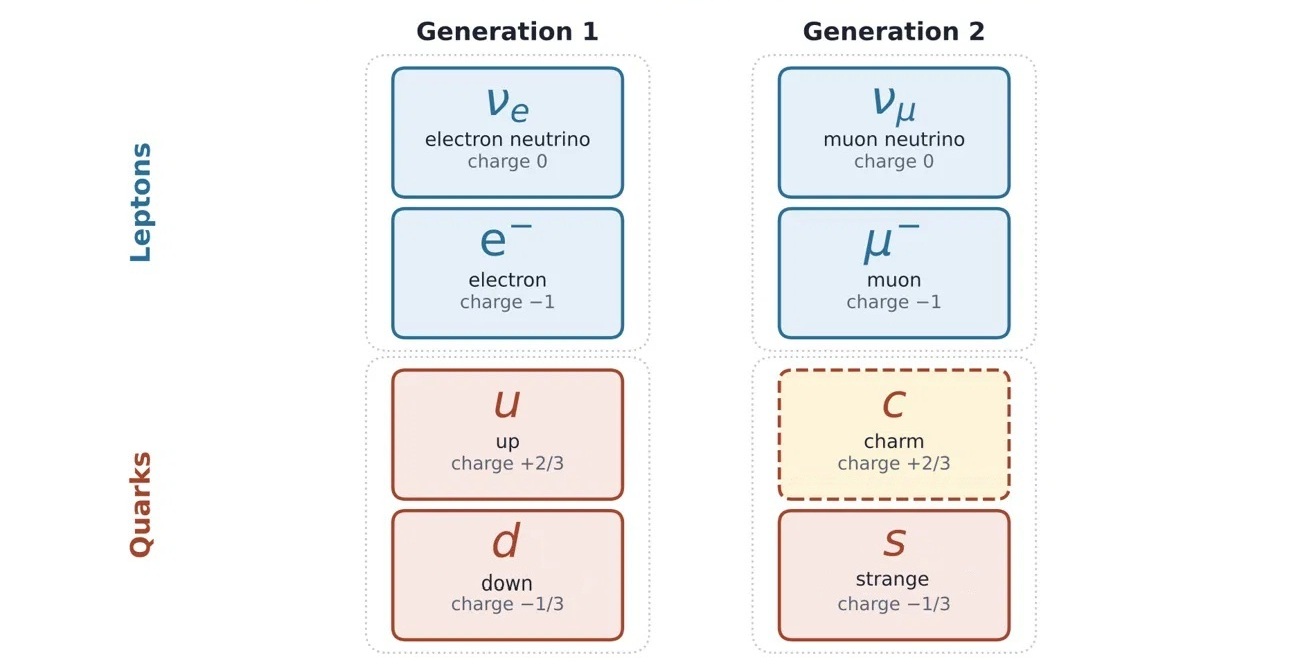 Image created by Claude, an AI assistant made by Anthropic, with minor edits by me
The paper effectively said flavor-changing neutral decay took place via two processes with opposite signs which cancelled each other out. It also talked of a mass-squared difference of delta (Δ), which denoted the severity of SU(4) symmetry-breaking. In addition it said“we now conclude that Δ must be not larger than 3-4 GeV”, and predicted a whole new family of charm-quark mesons and baryons. It said these had not been seen because they were “relatively heavy, say 2 GeV”. The charm quark was not well received. See The Charm of Theoretical Physics (1958–1993) where Maiani said⁴ this: “These episodes show how badly the idea of charm was received by everybody, from Nicola to Preparata to Nino Zichichi. It was really considered as a nuisance or, in the least, a trick of dubious taste”.
The Drell-Yan process
1970 also saw the Drell-Yan process, which was an extension of Bjorken scaling to hadron-hadron collisions. See Sidney Drell and Tung-Mow Yan’s Physical Review Letters paper Massive Lepton-Pair Production in Hadron-Hadron Collisions at High Energies. This massive pair lepton production is said to be the result of quark-antiquark annihilation to create a virtual photon which decays into a lepton-antilepton pair. It is also said to provide a window to look inside hadrons and measure Parton Distribution Functions, which are said to map out the probability of finding a parton of a given type with a given fraction of the proton’s momentum. Note though that whilst nowadays it is said that more energetic collisions reveal more sea quarks and gluons, Drell and Yan spoke of partons and “wee” partons, not sea quarks and gluons. They also spoke of “the creation of an essentially free parton-anti-parton pair”. They gave a Bjorken-like scaling factor tau and the expression τ = Q² / s, wherein Q² and s were “the squared invariant masses of the lepton pair and the two initial hadrons, respectively”.
Observation of antihelium
Meanwhile particle discoveries continued, albeit mainly short-lived resonances. See the Particle Data Group’s archive, where you can find a January 1970 Review of Particle Properties. This gives the particles discovered to date, and is 114 pages long. However the particles discovered during 1970 seem difficult to list. There appears to be no definitive source⁵. A comparison of successive Review of Particle Properties documents indicates that the following resonances were reported: X⁻(3030), X⁻(3075), X⁻(3145), X⁻(3475), X⁻(3535), N(2345), N̄(2345), and Ξ(1940), ππ(2157), N(3035), N̄(3035), and 3π(1764). It would seem however that some of these were not confirmed, and the Ξ(1940) is now labelled the Ξ(1950). See the Physical Review Letters paper Evidence for Ξ Resonances in the Ξ(1530)π System by Sheldon Apsell and 20 other authors for information on that⁶. In addition 1970 was when antihelium was first observed, at the U70 by the Yuri Prokoshkin group. See the Nuclear Physics B paper Observation of antihelium-3, along with Gloria Lubkin’s Physics Today article Antihelium Is Produced At Serpukhov Accelerator.
Electroweak renormalization
Particle discoveries continued in 1971. They included the X⁻(2820), the X⁺(3013), the K*(2800), the KN(1370), and the KN(1850). In addition it seems that the existence of the spin-3 ω₃(1670) meson resonance was confirmed; see the Physical Review D paper Production and decay of the φ(1680) in π⁺d —> pp π⁺π⁻π⁰ at 6.95 GeV/c. Perhaps more importantly, 1971 was the year of electroweak renormalization. That’s when Gerardus ’t Hooft is said to have shown that spontaneously broken gauge theories are renormalizable. He was a graduate student in Utrecht at the time. His supervisor was Martinus Veltman, who had been tussling with the issue for years. It is said that Veltman had given the task to ’t Hooft as a thesis topic, and was initially skeptical of his chances of success. It is also said that he was initially skeptical of what ’t Hooft came up with. However he became an avid supporter, saying this to Benjamin Lee, who was organizing a major conference session: “Put this boy on the program! It can be done! It is done!” Benjamin Lee was head of theoretical physics at the NAL, and the Nuclear Physics B paper by ’t Hooft was Renormalizable Lagrangians for massive Yang-Mills fields. It is said that this paper rescued the Glashow-Weinberg-Salam model from obscurity, and paved the way for the Standard Model of particle physics.
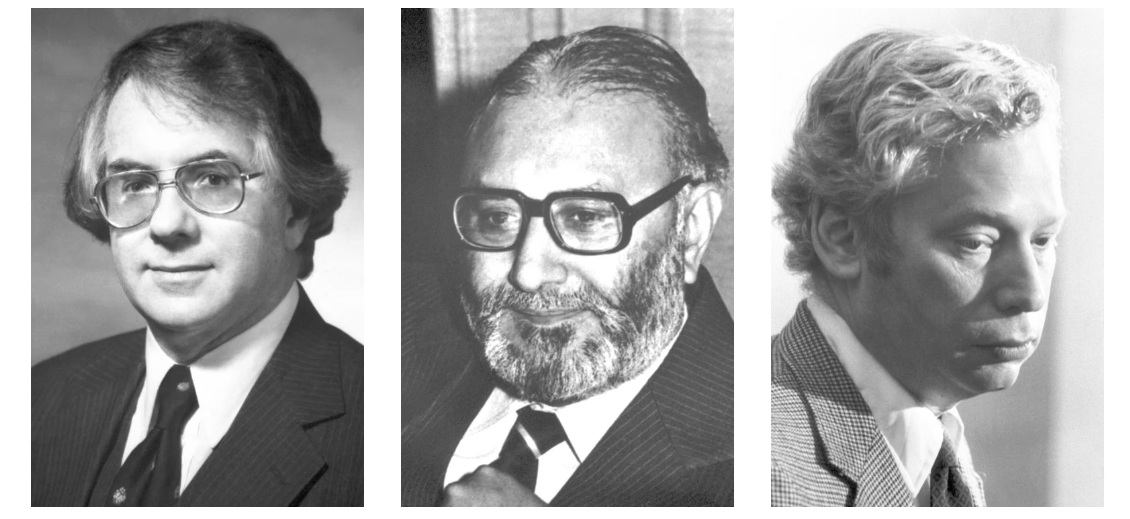 Images of Sheldon Glashow, Abdus Salam, and Steven Weinberg from the Nobel Foundation
It is also said that ’t Hooft introduced an Rξ gauge called the ’t Hooft gauge, where infinities caused by massive vector bosons were cancelled out by Higgs field Goldstone modes and ghost fields. This is said to be an example of gauge fixing. Veltman and ’t Hooft later shared a Nobel prize for “elucidating the quantum structure of electroweak interactions in physics”. Steven Weinberg also promoted ’t Hooft’s contribution to particle physics. See for example Weinberg’s 1971 Physical Review Letters paper Physical Processes in a Convergent Theory of the Weak and Electromagnetic Interactions.
Regularization and renormalization of gauge fields
1972 was an important year for particle physics. The Fermilab/NAL Main Ring reached its design energy of 200 GeV on March 1st, and then reached 300 GeV on July 16th. The Cambridge Electron Accelerator (CEA), operated by Harvard University and MIT, was converted from an accelerator into a collider in 1972. The Stanford Positron Electron Asymmetric Ring (SPEAR) came online at SLAC in 1972. In addition 1972 was when ’t Hooft and Veltman wrote their Nuclear Physics B paper Regularization and renormalization of gauge fields. This is where they used a mathematical trick called Dimensional Regularization to avoid infinite results. Note that dimensional regularization uses a non-integer number of spacetime dimensions, and is limited in that chirality, a vital electroweak feature, requires exactly four spacetime dimensions.
 GNUFDL right-hand rule image by Jfmelero see Wikipedia

This was acknowledged by ’t Hooft and Veltman in their conclusion: “the method fails if quantities particular to four-dimensional space, such as γ⁵ or the tensor εμναβ or the scaling behaviour play an essential role in the Ward identities”. For the record ’t Hooft and Veltman referred to a preprint by Carlos Bollini and Juan Giambiagi, saying Bollini and Giambiagi had pursued the idea independently⁷.
An anomaly-free version of Weinberg’s model
1972 was also when Claude Bouchiat, John Iliopoulos, and Philippe Meyer wrote their Physics Letters B paper An anomaly-free version of Weinberg’s model. Bouchiat, Iliopoulos, and Meyer are said to have demonstrated that the dangerous gauge anomalies cancel out exactly if the sum of the electric charges of all elementary fermions within a single generation equals zero. It is said that they showed that the electroweak theory is anomaly-free only if the quarks come in three colours. It is also said that David Gross and Roman Jackiw⁸ reached the same result in their Physical Review D paper Effect of Anomalies on Quasi-Renormalizable Theories.
Perspectives on theory of weak interactions
It is said that Benjamin Lee, head of theory at the NAL, delivered an influential presentation at the XVI ICHEP conference in Batavia. He talked about electroweak interactions, spontaneous symmetry breaking, and Higgs fields. See his Perspectives on theory of weak interactions. It is also said that CERN theorists Jacques Prentki and Bruno Zumino were so impressed that they urged the Gargamelle bubble chamber collaboration to alter their priorities and search for weak neutral currents. See John Ellis’s PhysOrg article The Higgs boson and the rise of the standard model of particle physics in the 1970s. Also see David Politzer’s Nobel prize lecture for some background information, such as this: “I, personally, know of no one who claimed to understand the details of ’t Hooft ’s paper. Rather we all learned it from Ben Lee, who combined insights from his own work”.
Quantum Chromodynamics
Another development that took place at the XVI ICHEP conference came from Murray Gell-Mann and Harald Fritzsch, who presented a paper called Current algebra: Quarks and what else? This promoted the concept of quark colors, which were initially labelled red white and blue, but are nowadays labelled red blue and green to match the RGB color model. It also introduced the concept of quark interaction via eight different types of massless neutral particles called gluons. These gluons were later said to have a combination of color charge plus anti-color charge. Hence one gluon might be a red-antigreen gluon, another might be a blue-antired gluon, and so on. This was the birth of Quantum Chromodynamics (QCD).
Was this a failure of the parton model
In addition a 19-author technical report was presented at the conference, called Initial results on e⁺ e⁻ interactions at ECM = 4 GeV/c at the CEA. The report concerned measurements of the R ratio of hadron/muon production. As I said earlier, the R-ratio was related to the Bjorken scaling that was said to have confirmed the quark model. The measurements were summarized by Vittorio Silvestrini in a plenary session called Electron-positron interactions. On page 12 Silvestrini said this: “Above 2E = 2.5 GeV, however, R goes on increasing”. He also said this “excludes (by two standard deviations) a value of R = 2 at 2E = 4 GeV”. See the graph on page 30 that shows R increasing with energy:
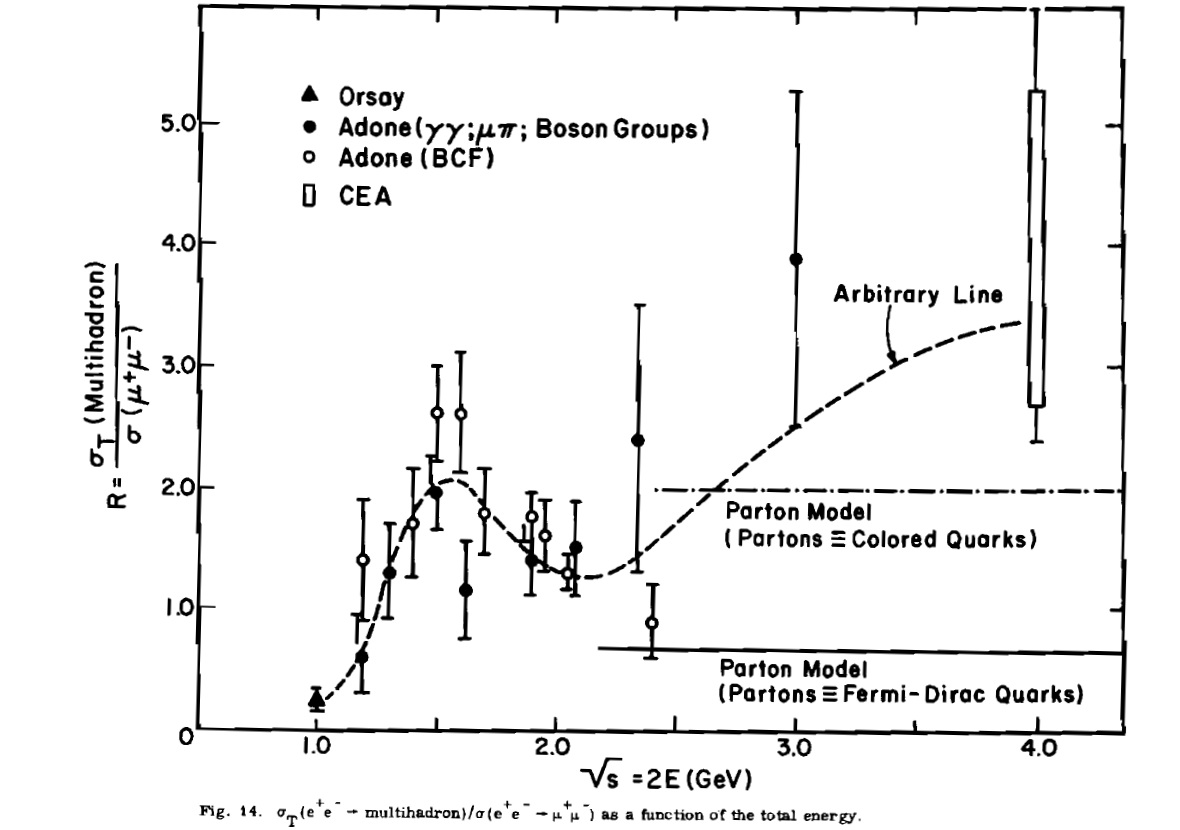 Figure 14 from Vittorio Silvestrini’s Electron-positron interactions
Silvestrini also said this: “unless R goes asymptotically to a constant, both the parton models and the LCSCC approach would be in trouble”. The parton model would be in trouble⁹ because it predicted an R-ratio of 0.67 at all energies. Even when extended for three quark colors, it predicted an R-ratio of 2 for all energies. This discrepancy caused some concern, but theorists hoped the CEA results were suffering from experimental errors. However their concerns deepened when the CEA team published their Physical Review Letters paper in 1973. It was called Hadron Production by Electron-Positron Annihilation at 4 GeV Center-of-Mass Energy. The paper, by Alan Litke and 14 other authors including CEA director Karl Strauch, reported an R-ratio of 4.7. See Personal Memories of 50 Years of Quarkonia by John Ellis. He said this: “Was this a failure of the parton model that had only recently found acceptance as a model for scaling in deep-inelastic scattering?”
Extraordinary cuts to federal science funding
The CEA closed down in 1973 due to funding cuts by the USA’s Atomic Energy Commission (AEC). See the Physics Today article The last crisis of US physics by Julia Menzel. She tells how after World War II physicists were “widely credited with ending the most destructive conflict in modern history”, and “moved to the center of public attention”. But then she tells us that the golden age ended in the early 1970s when officials in the Nixon administration “made extraordinary cuts to federal science funding”. These cuts “imperilled both long-running research programs and the careers of an entire generation of young scientists”. She also said that by 1973 the crisis was undeniable, and quotes Sidney Drell saying “the field is in deep trouble”. There was pressure to deliver results.
Asymptotic freedom
1973 was when Asymptotic freedom was proposed in two back-to-back Physical Review Letters papers. The first paper was Ultraviolet Behavior of Non-Abelian Gauge Theories by David Gross and Frank Wilczek of Princeton, who said “the effective coupling goes to zero for large momenta”. The second paper was Reliable Perturbative Results for Strong Interactions? by David Politzer of Harvard, who said “the effective coupling goes to zero for large momenta”. The papers are said to demonstrate that colored quark coupling decreases as the energy scale increases. It is said that this is why quarks had never been seen in isolation. It’s interesting to note that Sidney Coleman, who collaborated with David Gross whilst on a sabbatical at Princeton, was at the same time David Politzer’s supervisor at Harvard. Along with Benjamin Lee and James Bjorken, he was a trusted referee for Physical Review Letters. It’s also interesting to note that asymptotic freedom is said to have rehabilitated quantum field theory. Gross, Wilczek, and Politzer later shared a Nobel prize for their work.
A third generation of quarks
A further development in 1973 came from Makoto Kobayashi and Toshihide Maskawa in Kyoto. They claimed that without additional new fields, a four-quark model could not exhibit CP violation. The latter is an electroweak attribute which is said to be associated with matter-antimatter asymmetry. They proposed six quarks as a way forward. Their Progress of Theoretical Physics paper, published in February 1973, was CP-Violation in the Renormalizable Theory of Weak Interaction. In a way their proposal was a development of the Cabibbo matrix, which is said to preserve the universality of the weak interaction. It was also a development of the GIM mechanism which is said to have explained the suppression of flavor-changing neutral currents. Kobayashi and Maskawa said this: “It is well known that there exists, in the case of the triplet model, a difficulty of the strangeness changing neutral current and that the quartet model is free from this difficulty”. They ended up giving a 3 x 3 unitary matrix with 9 elements featuring 29 sine and cosine terms:
 Partial screenshot from CP-Violation in the Renormalizable Theory of Weak Interaction
They said “we have CP-violating effects through the interference among these different current components”. This was the birth of the Cabibbo Kobayashi Maskawa matrix, which is better known as the CKM matrix. It was also the birth of the third generation of quarks, which would later become known as top and bottom. Kobayashi and Maskawa later shared half a Nobel prize for their work.
The discovery of the weak neutral current
Another development in 1973 came when CERN reported the discovery of the weak neutral current. The Gargamelle collaboration at CERN, led by André Lagarrigue, were originally looking for charged-current (CC) events. That’s where a muon neutrino interacts with a proton and is transformed into a muon, which leaves a distinctive track. However the experimenters were encouraged by theorists Jacques Prentki and Bruno Zumino along with Mary Gaillard to search for the neutral current (NC). That’s where a muon neutrino interacts with a hadron such as a proton or neutron, or with an electron. The proton or neutron might fragment into pions, and the electron might fly off at a relativistic speed. By March 1973, the collaboration had identified 166 hadronic events. Each event appeared as a “muonless vertex”, a shower of hadronic particles with no muon tracks. The issue was that such events were just like the events produced by incoming high-energy neutrons. However they also found a “gold-plated” leptonic event:
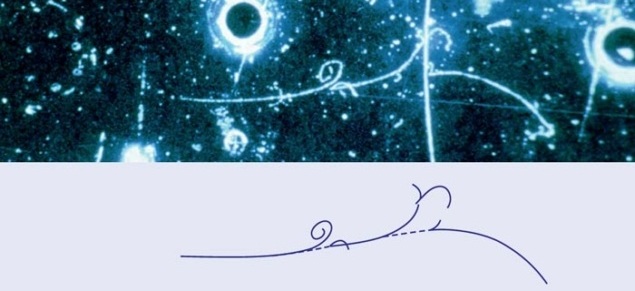 Image from the CERN Courier article Neutral currents a perfect experimental discovery. Caption: Fig. 2. The first leptonic neutral current event. An antineutrino coming from the left knocks an electron forwards, creating a characteristic shower of electron–positron pairs
This was reported in their Physics Letters B paper Search for elastic muon-neutrino electron scattering. This was printed back-to-back with their other paper Observation of neutrino-like interactions without muon or electron in the Gargamelle neutrino experiment. The papers had 51 authors and 55 authors respectively. A similar experiment was conducted at the NAL by the Harvard-Pennsylvania-Wisconsin-Fermilab (HPWF) collaboration led by Carlo Rubbia, David Cline, and Alfred Mann. Their preliminary results, along with the Gargamelle results, were presented by Gerald Myatt at the Bonn Conference in August 1973 as proof of neutral currents¹⁰.
Alternating neutral currents
As it happens the HPWF collaboration withdrew their paper because the neutral current signal disappeared when they modified their detector. However “Geometric Efficiency Mapping” and a “Hadron Punch-Through Calculation” took care of the issue. The episode became known as Alternating Neutral Currents. They eventually published a Physical Review Letters paper in April 1974. It was by 14 authors, and was called Observation of Muonless Neutrino-Induced Inelastic Interactions. The abstract was somewhat hesitant, saying “A possible, but by no means unique, interpretation of this effect is the existence of a neutral weak current“. A subsequent paper was called Measurement of Rates for Muonless Deep Inelastic Neutrino and Antineutrino Interactions. This confirmed the Gargamelle result. It is said that Carlo Rubbia, of both HPWF and CERN, acted as a conduit for inter-team communication. By the by, 1974 was when the NAL was renamed as Fermilab. It was also when Benjamin Lee and Mary Gaillard published their Physical Review D paper Rare decay modes of the K mesons in gauge theories. This predicted a charm quark mass of < 5 GeV. Glashow, Iliopoulos, and Maiani had predicted 2 GeV in their GIM paper. Appelquist and Politzer had predicted 1.5 GeV.
The R crisis
1974 was also the year of the R crisis. This concerned the Stanford Positron Electron Asymmetric Ring (SPEAR) at SLAC. Built on a parking lot on a shoestring budget by SPEAR Group leader Burt Richter and SLAC Director Wolfgang Panofsky, SPEAR had taken over from the CEA at Harvard. A SLAC-LBL collaboration used it to measure the R-ratio, and the results caused alarm. Burt Richter later said the earliest measurements of R were made at the ADONE ring at Frascati. He also said these were followed by higher-energy measurements of R made at the storage ring at the Cambridge Electron Accelerator (CEA) at Harvard. He then said that the early experimental results from the SLAC-LBL experiment at SPEAR filled in the gaps, and that “the value of R seems to rise smoothly from perhaps 2 to 6 as Ecm increases from about 2 to 5 GeV”. At the ICHEP 74 conference in London in July he said “These results are in violent disagreement with the predictions of the simple quark model”. He also said “a large fraction of the theoretical contributions to the conference attempt to explain this peculiar variation of R”. John Ellis described it as a shocking blow, because theorists had been almost unanimous in their expectation that R would be constant.
The November revolution
The fix came to be known as the November revolution. Two experimental teams on opposite sides of the USA are said to have discovered the exact same heavy resonance at the exact same time. A team at Brookhaven near New York, led by Samuel Ting, used the Alternating Gradient Synchrotron (AGS) to fire high-energy protons at a beryllium target. They plotted the energy of resultant electron-positron pairs. They found a peak at 3.1 GeV which they named the J particle. Meanwhile at SLAC near San Francisco, a team led by Burton Richter used the SPEAR electron-positron storage ring to find a spike in hadron production at 3.1 GeV. This is said to have indicated the brief existence of a particle which they named the Psi (ψ). It is said that Ting was in San Francisco attending a SLAC advisory committee meeting when he learned that Richter’s team was planning to announce their results the next morning. The two teams ended up issuing a joint press announcement, and the particle came to be known as the J/ψ meson. The two papers concerned were Experimental Observation of a Heavy Particle J and Discovery of a Narrow Resonance in e⁺e⁻ Annihilation. They were printed in Physical Review Letters, back to back, only three weeks later, with a supporting paper by the ADONE team. These papers are said to have persuaded the physics community that the charm quark had been discovered, and that the quark model was correct. Richter and Ting shared a Nobel prize only two years later¹¹. This was the birth of the Standard Model.
1 People tend to say Gell-Mann’s 1969 Nobel prize wasn’t for quarks, but see the presentation speech by Ivar Waller: “Gell-Mann has also found that ‘The Eightfold Way’ can be described very simply by assuming that all particles which interact strongly with each other are composed of only three kinds of particles which he called quarks and of the corresponding antiparticles. The quarks are peculiar in particular because their charges are fractions of the proton charge which according to all experience up to now is the indivisible elementary charge. It has not yet been possible to find individual quarks although they have been eagerly looked for. Gell-Mann’s idea is none the less of great heuristic value”.
2 It was also where a 76 GeV proton beam later went through Anatoli Bugorski’s head. He saw “a flash brighter than a thousand suns”, and received a radiation dose of circa 2,000 sieverts. He was not expected to survive, but did, albeit with permanent health issues. A whole-body exposure of 10 sieverts is usually a fatal dose.
3 The paper doesn’t talk directly about the unexpectedly high R-ratio, but it says it indirectly in the final three pages. On page 17 the paper talks about “multiple particle production (most likely hadrons)”, saying the total should be circa 70% greater than the kσ(4) four-particle cross-section. It then gives the latter as 3.1 x 10⁻³² cm². A figure 70% larger than this equates to 5.27 x 10⁻³² cm². This is more than twice the muon-production cross section of 2.5 x 10⁻³² cm² on page 19. For further background material on ADONE see ADONE, Asymptotic Freedom and QCD by Giorgio Parisi, along with From ADONE’s multi-hadron production to the J/Ψ discovery by Mario Greco.
4 See Maiani’s retrospective on The GIM Mechanism: origin, predictions and recent uses. That’s where you can read that the GIM solution required “the existence of a new, charge 2/3 quark, the charm quark, coupled by the weak interaction to the superposition of d and s quarks orthogonal to the Cabibbo combination dc”. Also see Glashow’s Current Contents article This Week’s Citation Classic.
5 Many thanks to “Claude” for the comparison of successive Review of Particle Properties. However my confidence level is not 100%. I asked the Particle Data Group if they had a spreadsheet giving particles with their discovery dates and the discovery papers. They replied saying they do not.
6 For current information see 70 Years of Hyperon Spectroscopy: A review of strange Ξ, Ω baryons, and the spectrum of charmed and bottom baryons. It’s by Volker Crede and John Yelton, and is dated February 2025.
7 Bollini and Giambiagi’s Physics Letters B paper was called Lowest order “divergent” graphs in v-dimensional space. It was published after the ’t Hooft and Veltman paper. However see 40 Years of Calculus in 4+ε Dimensions by Wolfgang Bietenholz and Lilian Prado. It says Bollini and Giambiagi submitted their paper in November 1971 “to the well-reputed journal Physics Letters B, which belongs to the Dutch publishing house Elsevier. However, the editors and referees found this approach too surprising and blocked its publication”. It also says “on February 21, ’t Hooft and his PhD advisor Martinus Veltman submitted an article to Nuclear Physics B (another journal that belongs to Elsevier), which suggested the same regularization procedure”. It also says this: “A further delicate detail is that Veltman was a member of the Advisory Editorial Board of Physics Letters B during that time”.
8 See Roman Jackiw’s Collaborating with David Gross; Descendants of the Chiral Anomaly for more. along with Tom Kibble’s History of electroweak symmetry breaking.
9 The LCSCC approach was to do with Light-Cone Singular-Current Commutators.
10 See the CERN Courier article Gargamelle: the tale of a giant discovery along with The Discovery of Weak Neutral Currents by Dieter Haidt.
11 See Richter’s Nobel prize lecture From the Psi to Charm – The Experiments of 1975 and 1976. Also see Ting’s Nobel prize lecture on The discovery of the J particle: A personal recollection. In addition, check out The Hunting of the Quark by Michael Riordan.